
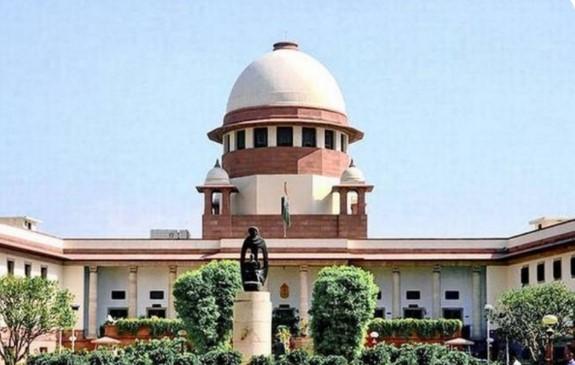
The Supreme Court on Friday directed the Centre to ensure there is no “complete prohibition” on metro and railway services to Delhi on October 10 amid security restrictions ahead of a protest called by the Cockroach Janta Party (CJP) and student organisations against Chief Election Commissioner Gyanesh Kumar.
A bench comprising Chief Justice of India (CJI) Surya Kant and Justices Joymalya Bagchi and V Mohana said security measures must be proportionate to the anticipated threat and should not cause undue hardship to ordinary citizens.
“The solicitor general has fairly agreed to impress upon the authorities to reconsider the prohibition and allow the movement of metro trains and other railway services in a suitably regulated manner,” the bench said, recording the assurance given by Solicitor General Tushar Mehta, who appeared for the Centre.
The court was hearing a plea challenging the closure of entry and exit gates at 57 Delhi Metro stations and the cancellation of trains scheduled to arrive in the capital ahead of Saturday’s protest.
“The only issue before us is whether the complete stoppage of metro trains and railway services from certain stations requires reconsideration,” the bench said, stressing that regulation and a complete prohibition were two different measures.
“One should not use a hammer to kill a fly,” the bench observed, adding that restrictions should go no further than necessary to address the anticipated security threat.
The court directed the Centre to publicise the authorities’ decisions on metro and railway services and ensure that inconvenience to the public was minimised. It also asked the authorities to review road closures and barricading and allow traffic to move freely wherever restrictions were not necessary.
“We are mainly concerned about the complete closure of these metro station entries. We have serious concerns about this,” the CJI told Mehta.
The bench said the restrictions could affect thousands of daily commuters travelling from Gurugram, Greater Noida and other parts of the National Capital Region to Delhi for work, education and other essential activities.
“Everybody does not have a car. Everybody does not have access to private transport. People depend on public transport. This cannot be done,” the CJI said.
“Citizens should not be unduly harassed. That is all we want,” he added, emphasising that law enforcement agencies must consider the needs of women, children, senior citizens and patients while maintaining public order.