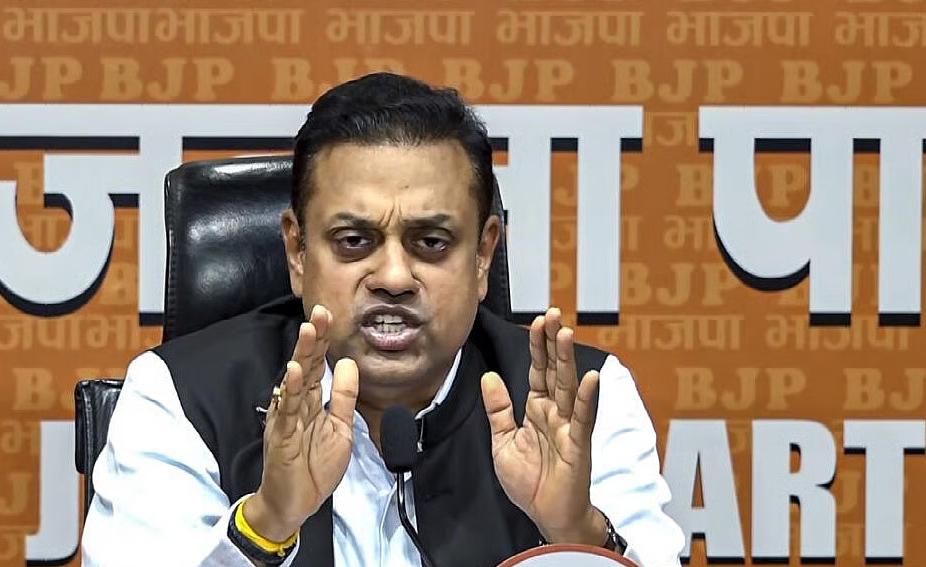
BJP national spokesperson Sambit Patra on Wednesday rejected the Opposition's "vote theft" allegations against the Election Commission and said elections in the country had been conducted smoothly since Narendra Modi became Prime Minister in 2014. Speaking at a press conference, Patra targeted Opposition parties, particularly the Congress, accusing them of questioning constitutional institutions after failing to win public support.
His remarks came amid a row over reports that Election Commissioners Sukhbir Singh Sandhu and Vivek Joshi had raised objections to decisions taken by the poll panel. An Indian Express report said the two Commissioners had recorded objections at least 14 times over 10 months on issues linked to voter registration, deletion of names, Form 6 and access to voter data. The Election Commission has maintained that such internal discussions and differing views are a normal part of decision-making, while saying its final decisions were unanimous.
Sambit Patra defends Election Commission
Patra said that since 2014, the people had repeatedly rejected the Opposition, according to his remarks at the press conference. He alleged that after Congress and its allies failed to win public support, they began what he described as planned attacks on constitutional institutions.
He also accused Opposition parties of questioning the Election Commission's impartiality out of frustration over electoral defeats and promoting what he called misleading claims of "vote theft". Patra referred to the Election Commission's detailed note and said decisions within the poll panel were taken through democratic and unanimous deliberation.
He said, "The Election Commission's recent note proves that there is official deliberation and discussion among all the Election Commissioners within the Commission. After lengthy discussions, all the Commissioners arrive at the same view."
Patra further said, "If the three Election Commissioners do not talk to each other, exchange views or deliberate, and simply agree with everything, Opposition parties call it dictatorship. They say that this government appointed these three Commissioners. They simply say 'yes' to everything. Now, according to information from the media, there have been 14 instances of correspondence and official communication between the three."
Patra said the process reflected the "beauty and maturity" of Indian democracy and argued that the Election Commission was functioning through democratic norms and institutional procedures rather than under a dictatorial system.
What is the EC-SIR controversy?
An Indian Express report published on Wednesday said Sukhbir Singh Sandhu and Vivek Joshi had raised objections at least 14 times over 10 months regarding decisions and orders of the Election Commission. The report said the objections covered issues including registration of new voters, deletion of names from electoral rolls, changes to Form 6 and access to voter data.
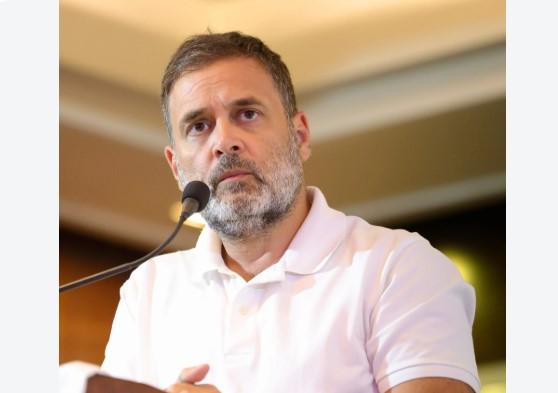
The report triggered criticism from Rahul Gandhi, Akhilesh Yadav, Mamata Banerjee and other Opposition leaders, who questioned the functioning of the Election Commission and also targeted the government.
Leader of Opposition in the Lok Sabha and Congress MP Rahul Gandhi released a video and accused the BJP, RSS and Election Commission over what he called "vote chori". He described it as a crime against Indian people and a direct attack on the Constitution, and alleged that the BJP, RSS and Election Commission had jointly carried out vote theft, calling it "treason".
Election Commission's response
Following the report, the Election Commission issued a clarification, saying that differences of opinion and comments during internal deliberations were a normal part of the decision-making process. It said not only the three Election Commissioners but every officer of the Commission was authorised to offer suggestions aimed at improving the electoral system.
The Commission said, "Any institution will have different views and comments during deliberations. These are part of the decision-making process before a final decision is taken. Not only the three Commissioners, but every officer of the Commission is fully authorised to give suggestions to the Commission for improving the electoral process."
It also said that highlighting selected internal comments and observations from a 10-month period while leaving out a larger number of approvals, decisions, directions and initiatives showed only part of the picture.
The Commission said, "10 months' worth of some specific internal comments/observations being highlighted, while ignoring the large number of approvals, decisions, directions and initiatives, shows only one part of the picture."
It added that in recent months, the Commission had taken several decisions, issued directions and launched around 40 new initiatives, while also carrying out electoral reforms including the revision of electoral rolls and the Special Intensive Revision, or SIR. According to the Commission, these were the result of unanimous decisions by the full panel over the past year.