
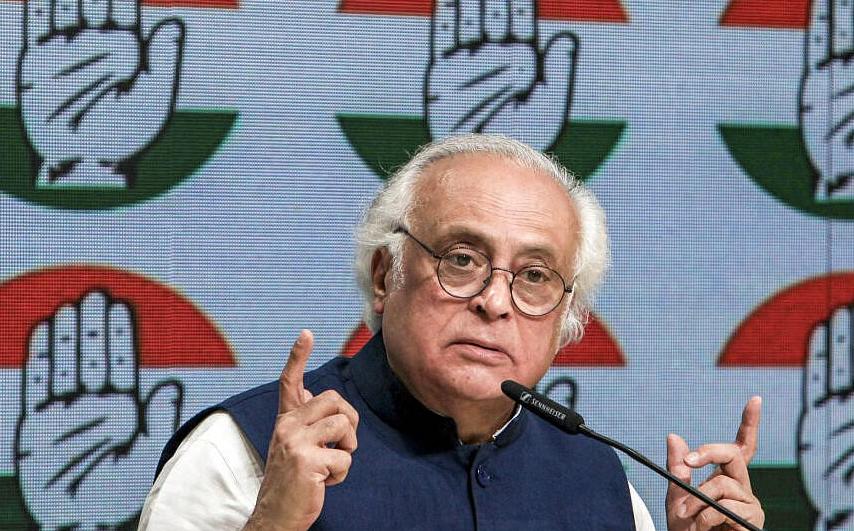
The Congress on Thursday intensified its attack on the Centre over the nationwide rollout of E20 petrol, alleging that the policy's motivations were "clearly not environmental" and arguing that a truly green fuel strategy must take into account its impact on water resources and food security.
Congress general secretary Jairam Ramesh said the Modi government has projected E20 fuel as a step towards cleaner energy and reduced dependence on imported crude oil, but a comprehensive assessment of its environmental impact must also consider the resources required to produce ethanol.
He noted that while many countries largely produce ethanol from agricultural residues and other waste biomass, India's ethanol production depends primarily on sugarcane, rice and maize.
Ramesh argued that these water-intensive crops place significant pressure on the country's water resources. Citing estimates, he said one litre of sugarcane-based ethanol requires around 3,630 litres of water, while rice-based ethanol can consume up to 10,790 litres. Maize-based ethanol, he added, requires roughly 4,670 litres of water per litre of fuel.
"These figures are particularly worrying as groundwater levels continue to decline across large parts of India," he said.
Ramesh also referred to the NITI Aayog's 2021 ethanol roadmap, saying it had recommended a gradual shift towards more sustainable feedstocks. However, he alleged that the government continues to incentivise rice-based ethanol production, claiming it recently informed Parliament that rice was being supplied to ethanol distilleries at nearly 40 per cent below its average procurement cost.
"A genuinely green fuel policy must account for the entire ecological footprint of the fuel it promotes. The motivations for E20 are clearly not environmental," Ramesh said.
The remarks came a day after the Congress alleged that the rollout of E20 petrol had deprived consumers of fuel choices, increased fuel costs and adversely affected vehicles, while claiming that ethanol producers were the primary beneficiaries of the policy.