
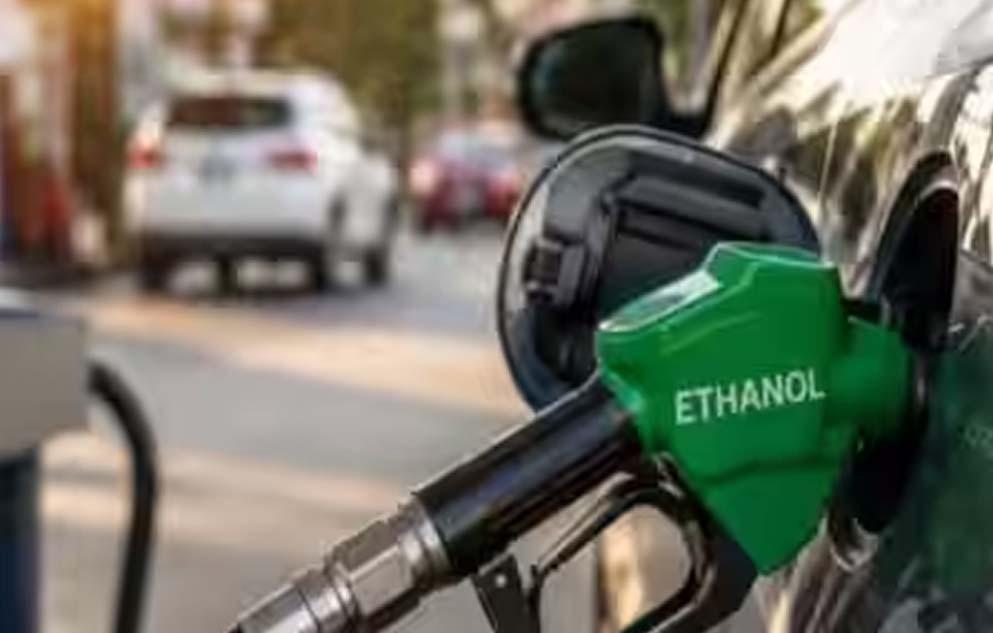
The Supreme Court on Thursday questioned the Centre over the feasibility of supplying fuel if vehicles running entirely on ethanol are permitted, asking how the required volumes would be made available.
“Academically, we want to know if permission is given to have 100 per cent ethanol run vehicles, how will you make the supply,” a Bench of Justice M M Sundresh and Justice Prasanna B Varale asked.
Attorney General R Venkataramani, appearing for the Centre, responded, “That will require large scale manufacturing re-arrangements.”
The court was hearing pleas relating to ethanol allocation for the Ethanol Supply Year (ESY) 2025-26. It referred to media reports suggesting that vehicles running on 100 per cent ethanol had been permitted.
On October 26, the Ministry of Road Transport and Highways notified amendments to the Central Motor Vehicles Rules, 1989, allowing flex-fuel vehicles capable of running on fuel containing up to E100, or nearly pure ethanol. On October 27, Petroleum and Natural Gas Minister Hardeep Singh Puri said the Centre had no immediate plans to raise the ethanol-blending level in petrol beyond the existing 20 per cent.
The Bench also emphasised the need to consider the wider public interest, environmental concerns and the interests of farmers, while framing ethanol policy.
Justice Sundresh observed that empowering farmers was an important aspect. “We have to address the third issue, which is how to empower the farmers. This is one aspect which nobody is highlighting,” he said.
The court added, “We need to empower the common man which is still in the villages.”
Venkataramani said he would address the concerns relating to farmers during his arguments. One of the lawyers appearing in the matter submitted that promoting ethanol would benefit farmers. “The central government policy takes into account the aspect of interest of farmers also,” the lawyer said.
The Bench posted the matter for hearing next month.
Flex-fuel vehicles are designed to operate on higher ethanol blends, including E85, which contains 85 per cent ethanol and 15 per cent petrol, and E100. Conventional petrol vehicles are approved for lower ethanol concentrations.
On June 30, the Supreme Court had ordered status quo on a Karnataka High Court direction concerning enhanced ethanol allocation for ESY 2025-26.
The matter arose from a plea by an oil marketing company that argued the High Court’s order could disrupt the national policy of blending 20 per cent ethanol with petrol.
The High Court had directed Bharat Petroleum Corporation, Hindustan Petroleum Corporation and Indian Oil Corporation to consider a dedicated ethanol manufacturer’s request for increased allocation.
It held that dedicated ethanol plants established under government policy and contractually bound to supply oil marketing companies should receive preferential allocation under long-term offtake agreements.