
The Centre has begun identifying locations in Jammu and Kashmir for new hydropower plants and is reviewing ways to channel water to northern states, Union Power Minister said in an interview with TOI.
The minister said some hydropower stations in the region are already operational, while work is under way to restore reservoir capacity through desilting. In addition, construction has resumed on three to four projects that had earlier stalled.
“Some plants are already operating, and desilting work is being undertaken to restore reservoir capacity. Work has also started on three-four projects that were stalled. Additional projects are being pla-nned, and site identification is under way,” he said.
Authorities are now examining potential sites for more plants as part of plans to increase power generation from the region.
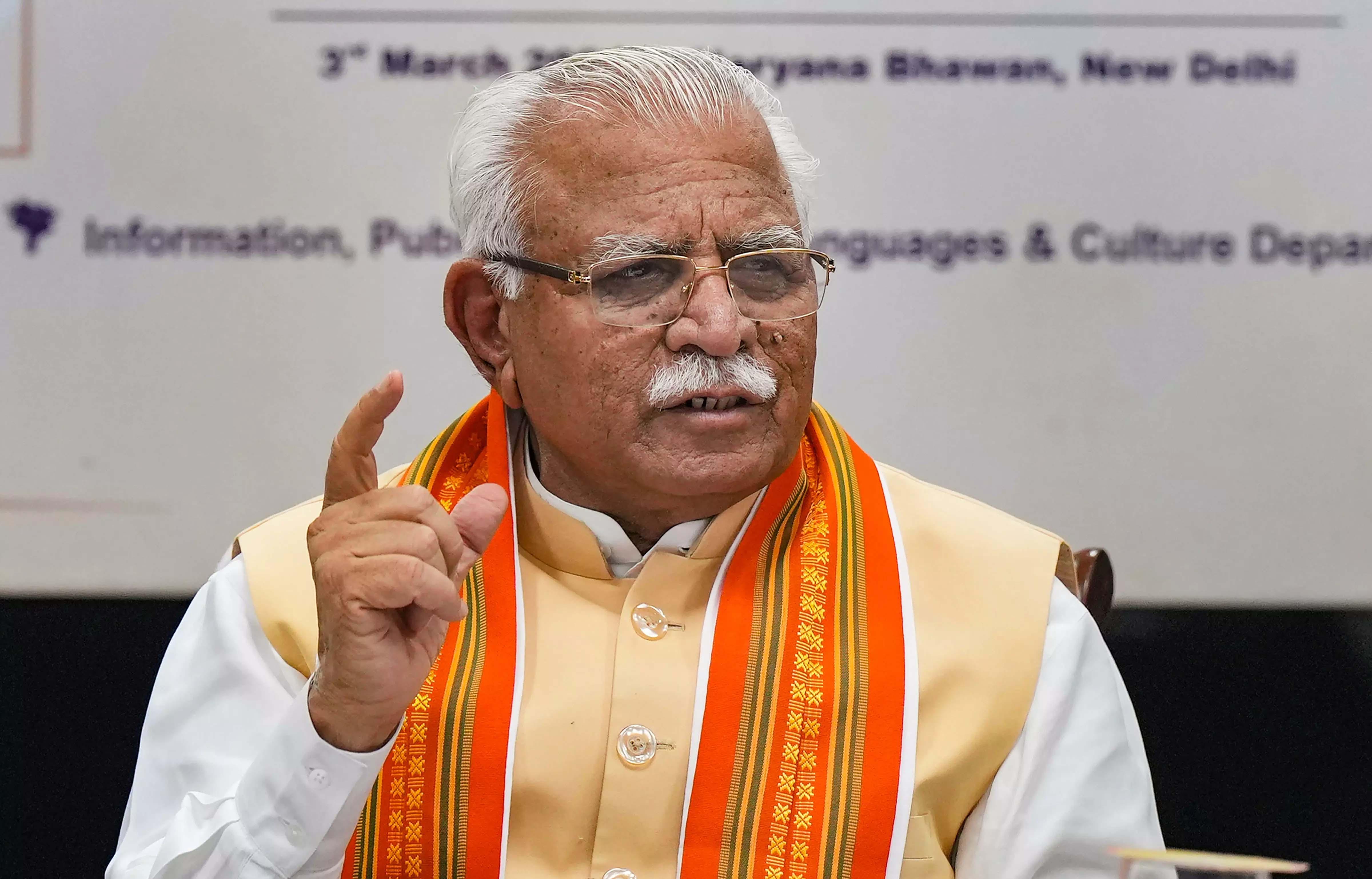
The former Haryana CM told the news outlet the government is also studying the possibility of diverting water from the region toward Punjab and further to Rajasthan, Haryana, Uttar Pradesh and Delhi through canals or tunnels.
“There are also proposals to divert water towards Punjab and further to Rajasthan, Haryana, UP and Delhi through canals or tunnels. There are two-three possible routes; we have to see which one can be built faster and will be financially viable. One that has been proposed through the city of Jammu may not be feasible. The feasibility of another alignment around the city is being checked.,” the union minister added.
According to the Khattar, two or three potential routes are under evaluation. One alignment proposed through the city of Jammu may not be practical, while another route bypassing the city is currently being assessed for feasibility and cost.
The remarks come amid wider discussions on strengthening India’s power infrastructure to keep electricity supply ahead of rising demand.
The minister added that the PM Modi-led Central government is expanding generation capacity with a greater emphasis on renewable energy. While thermal plants earlier dominated capacity additions, the current focus is on solar power and other green sources.
Since solar energy is not available around the clock, the government is working on storage solutions to ensure reliability.
Nuclear power is also expected to play a larger role in the future energy mix. India currently has around 8GW of nuclear capacity, with another 12GW under development.
The long-term goal is to reach about 100GW of nuclear capacity by 2047, and states have been encouraged to host at least one project each.
Thermal power will continue to play a role in ensuring continuous supply and maintaining grid stability, the minister said.
Around 20,000MW of thermal capacity is currently under development, with projects planned up to 2032. After that, the need for new coal-based plants may diminish as renewable energy capacity expands and India moves toward its target of net-zero emissions by 2070.
He also pointed to improvements in the power supply situation over the past decade. The demand-supply gap, which stood at around 5.5% in 2014-15, has narrowed significantly to about 0.1% in 2024-25, largely due to technical factors and expansion of capacity.
On the financial health of power distribution companies, the minister noted that while discoms reported profits of about Rs 2,700 crore recently, the sector still carries accumulated losses of roughly Rs 6.7 lakh crore.
Losses had previously widened because tariffs were often lower than the cost of supply, particularly when governments offered subsidised electricity.