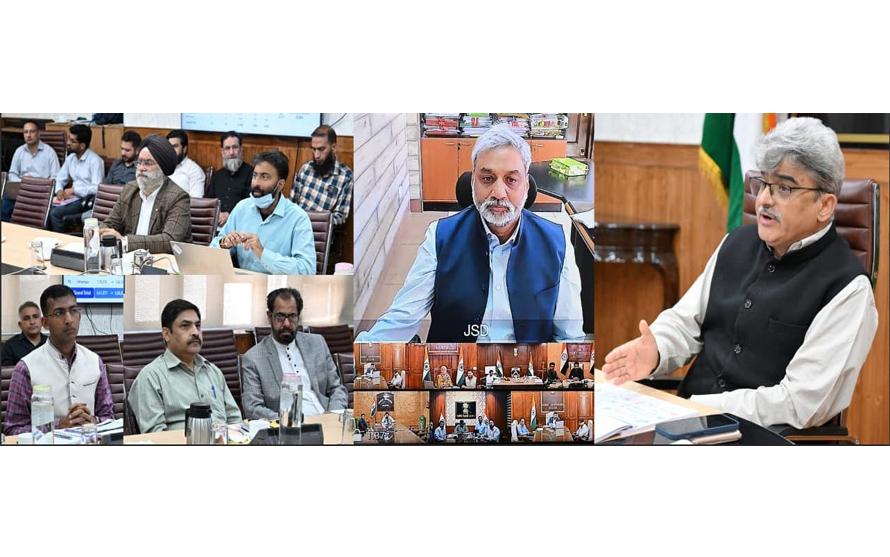

The Government of Jammu & Kashmir has initiated the process for identification of eligible beneficiaries under the Antyodaya Anna Yojana (AAY) category across all districts for providing 200 units of free electricity, in line with its commitment to extend targeted relief to economically weaker sections.
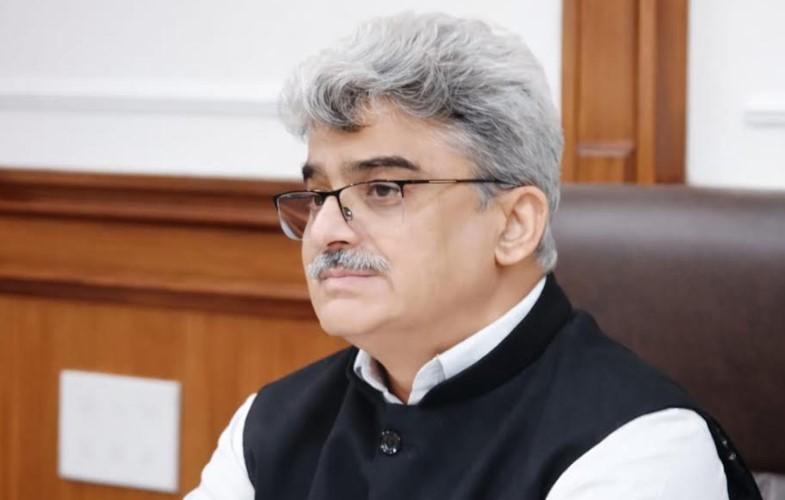
The progress of this initiative was reviewed in a high-level meeting chaired by Chief Secretary Atal Dulloo, focusing on accelerating reforms in the power sector with a balanced emphasis on social welfare, sustainability, and efficiency. The meeting also assessed the implementation of the Revamped Distribution Sector Scheme (RDSS) and scaling up of rooftop solar adoption under the PM Surya Ghar: Muft Bijli Yojana.
The free electricity initiative is expected to benefit over 2.22 lakh AAY households across the districts of the UT, ensuring near-universal district coverage. The process of identification and extension of this benefit to the eligible population is going on in coordination with the respective district administrations with many of the targeted beneficiaries living in far off areas.
On this occasion Additional Chief Secretary, Power Development Department, Ashwani Kumar, informed that extensive field verification and data validation exercises are underway in close coordination with district administrations to ensure that only genuine beneficiaries are covered.
He highlighted that efforts are being made to address challenges such as discrepancies between ration card and electricity consumer databases, cases of migration, locked or inaccessible households, and reluctance among certain beneficiaries.
Special emphasis is being placed on ensuring inclusion of households in remote and mountainous areas, where logistical constraints such as scattered habitations and extended power distribution networks pose significant challenges.
Alongside this welfare initiative, the Union Territory has registered significant progress under the rooftop solar programme. The PM Surya Ghar: Muft Bijli Yojana is facilitating adoption through consumer-friendly financing options, including access to bank loans at attractive interest rates.
Managing Director, Jammu Power Distribution Corporation Limited, Gurpal Singh, informed that over 28,600 applications have been received in Jammu Division, with more than 11,000 installations completed, reflecting a progress of around 67 percent.
Similarly, Managing Director, Kashmir Power Distribution Corporation Limited, Mehmood Ahmad Shah, stated that Kashmir Division has witnessed an overwhelming response, with over 73,000 applications received and more than 17,700 installations completed, with several districts surpassing their assigned targets.
It was further informed that the scheme is largely being implemented under the RESCO (Renewable Energy Service Company) model, wherein private developers undertake installation and maintenance without requiring upfront investment from consumers, thereby making solar energy accessible to a broader population.
The meeting also reviewed progress under the Revamped Distribution Sector Scheme (RDSS), a flagship reform initiative aimed at strengthening the power distribution infrastructure. Key interventions under RDSS include smart metering, infrastructure augmentation, feeder segregation, energy accounting, and reduction of Aggregate Technical and Commercial (AT&C) losses.
It was informed that works amounting to ₹5,762 Cr are being executed across districts through various Project Implementing Agencies (PIAs), including ₹1,053 Cr for smart metering and ₹4,709 Cr for loss reduction measures.
The meeting was apprised that over 7.10 lakh smart meters have been installed across Jammu and Kashmir, including nearly 3 lakh installations in the past six months alone. Significant improvements in operational efficiency were also reported, with the ACS-ARR gap reduced to 0.3 by FY 2025-26, billing efficiency increased to 77 percent, collection efficiency to 94 percent, and AT&C losses brought down to 30 percent.
The Chief Secretary reiterated that the integrated approach combining direct financial relief through free electricity with long-term structural reforms such as solarisation and RDSS-backed infrastructure upgrades is expected to substantially improve power reliability, reduce losses, and promote clean energy adoption across the Union Territory.
These measures are seen as a significant step towards ensuring inclusive growth, energy security, and sustainable development across all districts of Jammu and Kashmir.