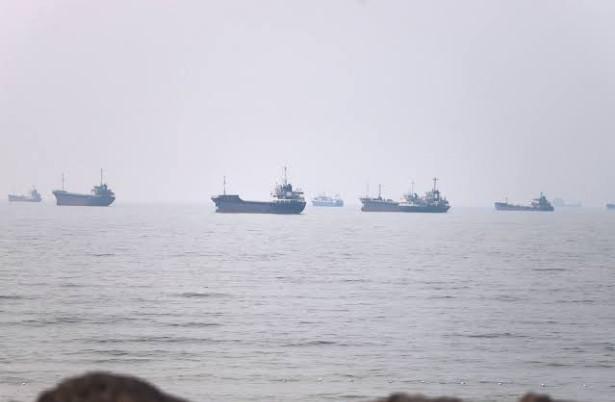

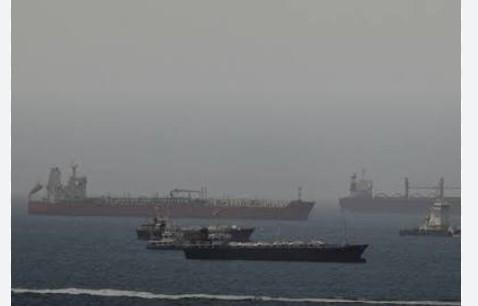
One Indian seafarer was killed and six other Indian crew members injured after two UAE tankers were allegedly hit by Iranian missiles in the Strait of Hormuz, as the United States resumed its maritime blockade of Iranian ports and launched a third consecutive night of strikes against Iran, sharply escalating tensions in the Gulf.
According to the BBC, the UAE accused Iran of carrying out the attack on the two tankers on Monday, describing it as a "brazen" assault that killed one Indian crew member and wounded eight sailors, including six Indians and two Ukrainians. Four of the injured were reported to be in serious condition.
Meanwhile, the United States has resumed its maritime blockade of Iranian ports and launched a third consecutive night of military strikes against Iran, sharply escalating tensions in the Gulf even as both Washington and Tehran continued to signal that diplomacy remained possible.
In a statement posted on X, the US Central Command (CENTCOM) said that, on the direction of the US President, American forces would resume blockading maritime traffic entering and exiting Iranian ports from 4 p.m. US Eastern Time on July 14."CENTCOM forces will enforce the blockade against vessels transiting to or from Iranian ports and coastal areas," the command said, adding that commercial shipping not violating the blockade would continue to receive safe passage through regional waters.
According to CENTCOM, the previous blockade, enforced between April 13 and June 18, saw US forces redirect more than 140 compliant vessels, disable nine non-compliant ships and allow over 50 humanitarian aid vessels to transit the region.
CENTCOM also announced that US forces had begun a third consecutive night of strikes against Iranian targets.
"At 4:45 p.m. ET today, U.S. Central Command began launching the third consecutive night of strikes against Iran, at the Commander in Chief's direction. These strikes will continue imposing a heavy cost on Iranian forces and degrade their ability to attack innocent civilians and commercial shipping in the Strait of Hormuz," the statement said.
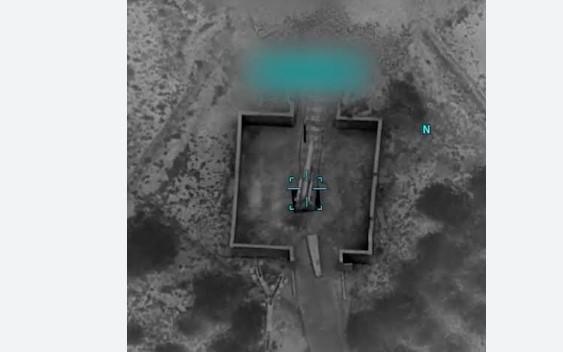
Earlier, the command added that American forces had used multiple one-way attack surface drones to strike a submarine and ship maintenance facility at Iran's Bandar Abbas Naval Base, marking what it described as the first combat use of US unmanned surface vessels.
Iran strongly condemned the renewed military action.
According to Iran's official news agency IRNA, Foreign Minister Abbas Araghchi described the US actions in the Strait of Hormuz as "criminal and provocative" during a telephone conversation with Cyprus Foreign Minister Constantinos Kombos.
Araghchi said the US actions had "jeopardized regional peace and security" and argued that the insecurity in the Gulf and the Strait of Hormuz was "a direct consequence of the military aggression by the United States and Israel against Iran." He urged the international community to hold Washington accountable.
Iranian Foreign Ministry spokesperson Esmaeil Baqaei also accused Washington of violating last month's memorandum of understanding between the two countries.
Speaking at his weekly press briefing, Baqaei said the agreement had entered "a stage of crisis" because of renewed US military action, insisting that "Iran had never been the first to violate its obligations."
He alleged that Washington had breached the understanding before even allowing the one-month period specified in the agreement regarding Iran's commitments in the Strait of Hormuz.
"Iran has made it clear it will remain committed to the deal as long as the other party adheres to its obligations. No one can accuse the Islamic Republic of breaching promises," Baqaei said.
Meanwhile, the confrontation spilled over into maritime security after the United Arab Emirates accused Iran of attacking two Emirati tankers in the Strait of Hormuz, killing one Indian crew member and injuring eight others, including six Indians, according to the UAE Defence Ministry. Iran has not accepted responsibility for the attack. BBC reported that the incident has further heightened fears over the security of one of the world's busiest energy corridors.
BBC also reported that US President Donald Trump announced a new 20 per cent charge on cargo transiting the Strait of Hormuz as part of the renewed blockade, saying the United States would act as the "Guardian of the Hormuz Strait." Trump said the US was "hitting them very hard" while expressing optimism that a negotiated settlement with Iran remained possible.
Responding on X, Araghchi said Iran had "always been the GUARDIAN of the Strait and will remain so FOREVER," while sarcastically suggesting that a 20 per cent charge was "too much" and that Tehran "will be fair," according to the BBC.
The renewed confrontation has reignited concerns over freedom of navigation in the Strait of Hormuz, through which roughly a quarter of global oil trade and about one-fifth of liquefied natural gas shipments normally pass. Maritime traffic remains heavily restricted as the military standoff continues, the BBC reported.
The International Maritime Organization has also opposed the proposal to levy transit charges through the Strait, saying there is "no legal basis" for imposing mandatory tolls on vessels using an international waterway, according to Reuters as cited by the BBC.