

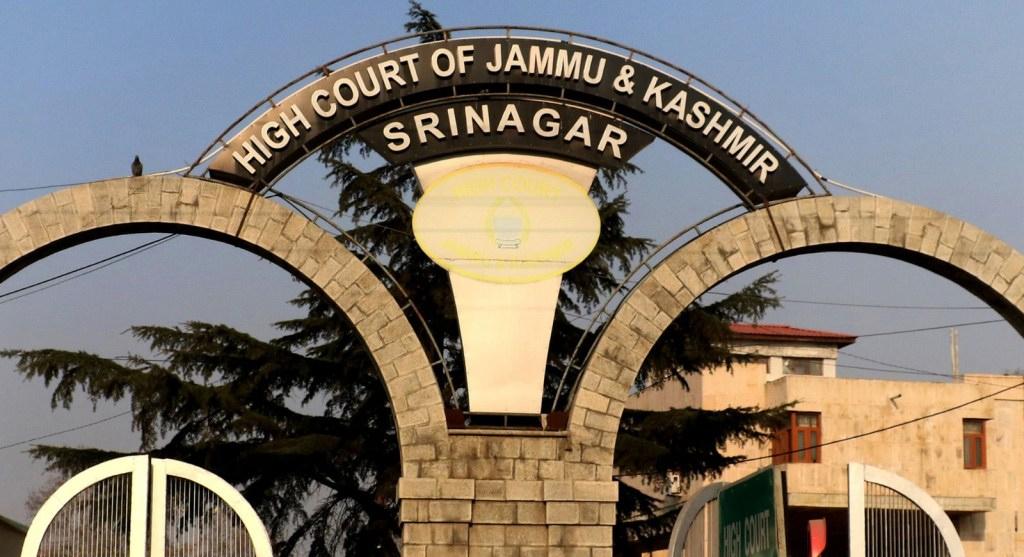
The High Court of Jammu & Kashmir and Ladakh has declined to direct the Central Information Commission (CIC) to dispose of second appeals under the Right to Information (RTI) Act within 45 days, observing that the law does not prescribe any such timeline. At the same time, the Court asked the Commission to take appropriate measures to improve its functioning and address the growing pendency of appeals.
The directions came while disposing of a Public Interest Litigation (PIL) filed by Junaid Javid, a resident of Uri in Baramulla, who had sought a writ of mandamus directing the CIC to decide all pending appeals, particularly those filed by residents of the Union Territory of Jammu and Kashmir, within 45 days. The petitioner had also sought the establishment of a mechanism for the time-bound disposal of second appeals and placed a set of suggestions before the Court for improving the functioning of the Commission.
A Division Bench comprising the Acting Chief Justice, Justice Sanjeev Kumar, and Justice Mohd Yousuf Wani first allowed an application seeking permission to place the petitioner’s suggestions on record before taking up the main matter.
During the hearing, the CIC submitted that it was not in a position to adhere to any fixed timeline for deciding appeals in view of its existing infrastructure and the large number of second appeals and complaints received by the Commission.
After considering the submissions, the Bench observed that the Right to Information Act, 2005, does not prescribe any statutory time limit for deciding second appeals and complaints. It held that the Court could not issue a mandamus fixing a 45-day deadline, as sought by the petitioner.
The Court, however, observed that the absence of a statutory timeline does not permit appeals to remain pending indefinitely. It noted that the CIC should not keep appeals undecided for years together and needs to strengthen its working by putting in place an effective mechanism to reduce the backlog and deal with the inflow of fresh appeals and complaints.
Accordingly, the Bench disposed of the PIL with a direction to the CIC to examine the issue and take appropriate measures to improve its functioning, subject to infrastructural constraints and the volume of appeals and complaints received.
The Court also observed that the Commission may consider the suggestions submitted by the petitioner and make use of them for improving its functioning if they are found to be genuine and practical.