
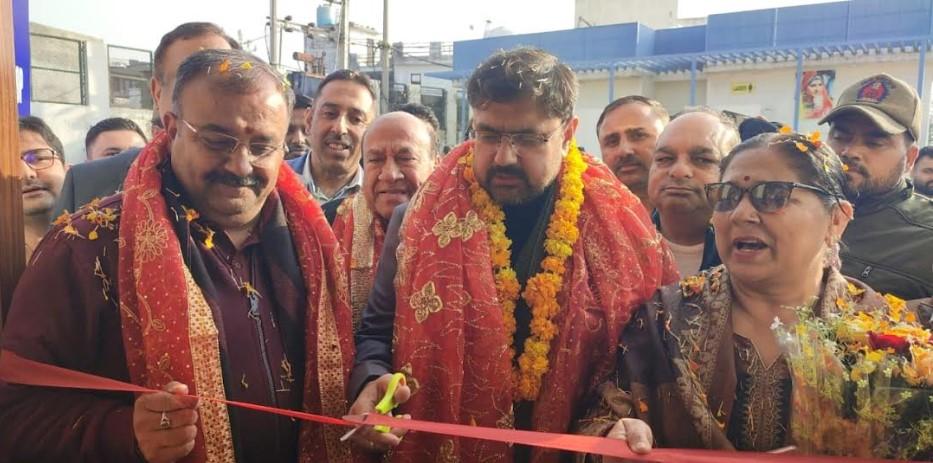
With a view towards strengthening the Jammu & Kashmir’s renewable energy ecosystem, Minister for Food, Civil Supplies & Consumer Affairs, Transport, Information Technology, Youth Services & Sports, ARI & Trainings, Satish Sharma, today inaugurated the 143 KW Grid-Connected Rooftop Solar Power Plant installed at the JK Cable Car Corporation, Bahu Jammu.
The inauguration-cum-awareness programme was organized by the Jammu & Kashmir Energy Development Agency (JAKEDA) under the aegis of Science & Technology Department.
The event was attended by MLA Vikram Randhawa, CEO JAKEDA Dr P.R.Dhar, Additional CEO JAKEGA senior officials from JAKEDA, Science & Technology Department, officers of JK Cable Car Corporation, engineers, project staff and local stakeholders.
The newly commissioned 143 KW rooftop solar plant is part of the UT’s broader agenda to adopt renewable energy technologies across the government buildings and public infrastructure.
Having an Installed Capacity of 143 KW, the project costs ?74.55 lakh and will generate 1.83 lakh units annually saving around ?15 lakh through reduced electricity expenditure. It will also ensure reduction of 1.33 lakh kilograms of CO2 emissions annually and has a System Life Expectancy of 25 years or more.
Speaking at the event, Satish Sharma said that the inauguration of this solar project marks a significant milestone in Jammu & Kashmir's march towards energy efficiency and environmental sustainability. He emphasized that the government is focused on accelerating the transition from conventional, fossil-fuel-based power sources to non-polluting renewable alternatives.
The Minister added that the solar plant at JK Cable Car Corporation will serve as a demonstration model for other departments, showcasing how rooftop solar installations can drastically reduce operational costs, reduce carbon footprints and improve energy self-reliance.
Satish Sharma further highlighted the vision of the government to ensure large-scale adoption of rooftop solar systems and expansion of decentralized renewable energy solutions. This will strengthening the capacity of government institutions to reduce energy dependency, facilitating a cleaner and greener development trajectory for Jammu & Kashmir, he added.
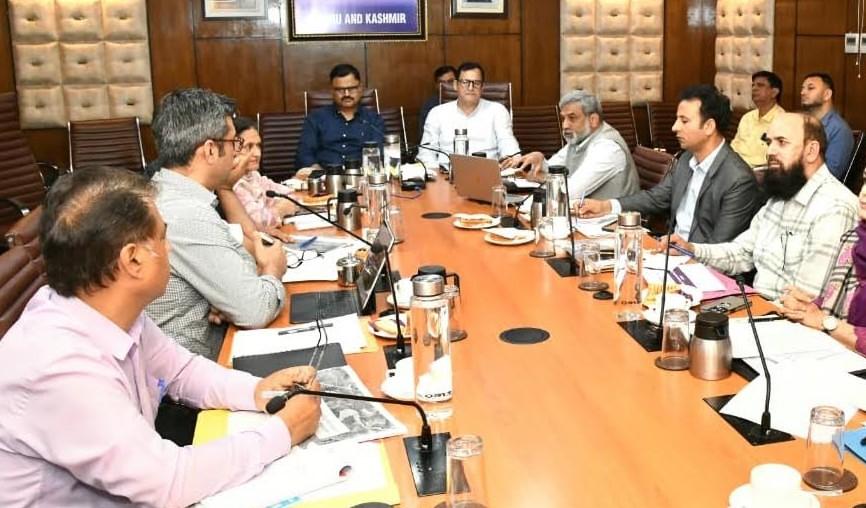
The Minister also reviewed the operational readiness of the plant, interacted with the engineers and technical teams. He stressed the importance of periodic monitoring, system upkeep and skill enhancement for ensuring long-term efficiency.
Satish Sharma directed the JAKEDA and the Science & Technology Department to identify more government buildings for immediate rooftop solar installation besides ensuring timely completion of ongoing solar projects. He also called for strengthening awareness programmes for the public and institutional users and promote clean energy solutions across urban and rural pockets of Jammu and Kashmir.
The project will reduce approximately 1.33 lakh kg of CO2 emissions annually, contributing significantly to the Jammu and Kashmir’s climate commitments and national renewable energy targets. This aligns with India’s larger goals under the National Solar Mission and its pledge to expand non-fossil fuels.