
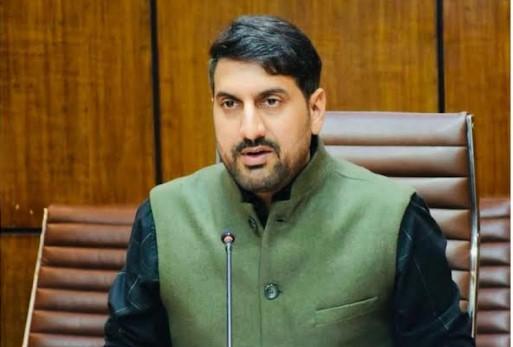
Secretary, Rural Development (RDD) & Panchayati Raj, Mohammad Aijaz Asad today chaired a high-level review meeting under the Swachh Bharat Mission-Grameen and directed all Deputy Commissioners to prepare comprehensive District Sanitation Plans within one week for universal door-to-door waste collection across rural Jammu & Kashmir.
The Secretary said the District Sanitation Plans must begin with Panchayat-wise mapping of existing rural sanitation infrastructure created by the Department, including Segregation Sheds, Plastic Waste Management Units (PWMUs), compost pits, soakage facilities, waste collection points, transport vehicles and other sanitation assets, so that these are effectively integrated into the waste collection chain.
He instructed districts to design Panchayat-wise collection routes, assess manpower needs and establish linkages between household waste collection and scientific processing/disposal facilities. He added that cluster-wise review meetings would be held after submission of district plans.
The Secretary stressed that several sanitation assets in the past had been created at unsuitable locations and therefore future planning must ensure optimum utility, accessibility and long-term sustainability.
He further directed strict implementation of the Solid Waste Management Rules-2026, making four-stream segregation at source mandatory—wet waste, dry waste, sanitary waste and special care waste. Domestic hazardous waste such as medicines, paints and thermometers, he said, must also be separately handled.
To ensure sustainability, Mohammad Aijaz Asad said that dedicated funds have now been earmarked as a dedicated allocation for door-to-door collection, segregation and operation & maintenance of sanitation assets. However, he emphasised that user charges must be regularly collected so that the system remains financially viable.
He observed that waste management should not become a “leaking bucket” dependent only on repeated government funding, adding that long-term success depends on community ownership, cost recovery and efficient local management.
Emphasising citizen participation, he said strong IEC campaigns are essential and identified tourist destinations, markets, hospitals, schools, urban-rural fringe zones and legacy waste sites as special focus areas.
District administrations were also directed to maintain zero tolerance against roadside dumping, animal dung accumulation along village roads, choked drains and open burning of waste.
The Secretary asked districts to verify sanitation coverage data, especially where limited coverage has been reported and directed Assistant Commissioners Panchayats to reconcile figures with Deputy Commissioners before finalisation of plans.
Earlier, Director General Rural Sanitation Anoo Malhotra gave a detailed presentation on progress achieved and the roadmap under SBM-G Phase-II, highlighting expansion of source segregation and participation of Gram Panchayats, SHGs and NGOs.