
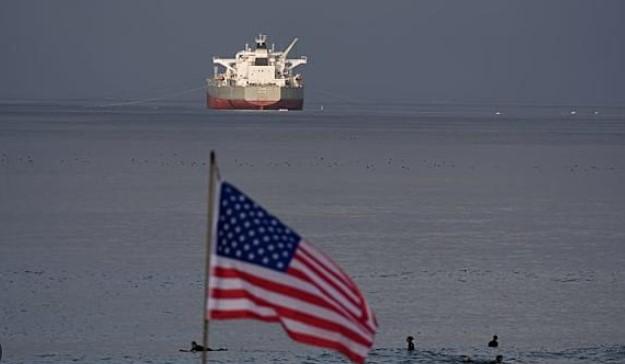
The United States Department of the Treasury has prolonged its sanctions waiver for Russian crude already stuck at sea, granting an additional month of relief. The fresh order issued on Monday confirms that the earlier General License No. 134B, which expired on May 16, has now been fully replaced by General License No. 134C, effective May 18. According to the Office of Foreign Assets Control, the waiver applies only to Russian oil shipments that were at sea on or before April 17 and now remains valid until June 17. The licence also clearly excludes any transaction involving individuals or entities based in Iran, North Korea, Cuba or territories of Ukraine controlled by Russia.
Details of earlier exemptions
Before this extension, the United States had approved a one-month sanctions exemption for India beginning March 5 to facilitate purchases of Russian oil already on the water. A similar relief window was later opened for several other nations, which closed on April 11. That broader waiver was extended again on April 17 for another month. The temporary waiver allowing global sale and delivery of Russian seaborne crude ended on May 16. This marks the second instance in which Washington allowed the relief licence to expire without immediate clarity on follow-up action. The initial licence, issued in mid-March, aimed to stabilise global oil markets after the US-Israeli war against Iran sparked an unprecedented disruption in global crude supply.
India reiterates its independent stance on Russian crude
However, India has made it clear that its oil procurement decisions remain unaffected by American sanctions relaxations or their absence. Speaking at a media briefing, Sujata Sharma, joint secretary in the Ministry of Petroleum and Natural Gas, stressed that New Delhi's choices are governed entirely by commercial logic and supply considerations.
She underlined that India has consistently sourced crude from Russia despite the shifting sanctions landscape. "Regarding the American waiver on Russia, I would like to emphasise that we have been purchasing from Russia earlier. Before waiver also, during waiver also, and now also," Sharma said.
She added that refiners continue to secure enough crude through long-term contracts and that no supply shortages have been reported. "It is basically the commercial sense which should be there for us to purchase," she noted. Sharma also reaffirmed India’s confidence in its energy security planning, stating, “Whatever waiver or no waiver, it (availability) will not affect.”
Russian oil remains central to India's import basket
Discounted Russian crude has become a vital part of India's import profile since 2022, when Moscow's invasion of Ukraine prompted sweeping sanctions from the West and forced Russia to reroute its oil to alternative buyers. As global prices rose sharply, Indian refiners turned to cheaper Russian barrels to shield consumers and manage rising energy costs. While Russia faced a barrage of sanctions following its February 2022 invasion, the oil itself was never directly sanctioned. This allowed India, the world's third-largest consumer and importer of crude, to continue benefiting from discounted Russian supplies and maintain stable domestic pricing despite global volatility.