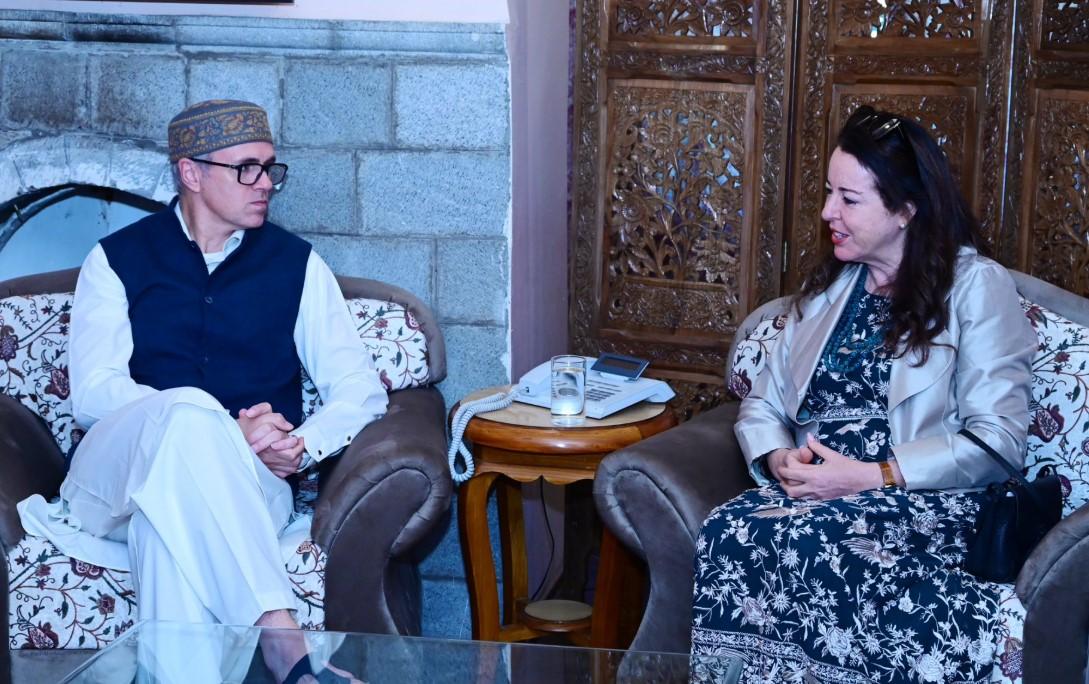

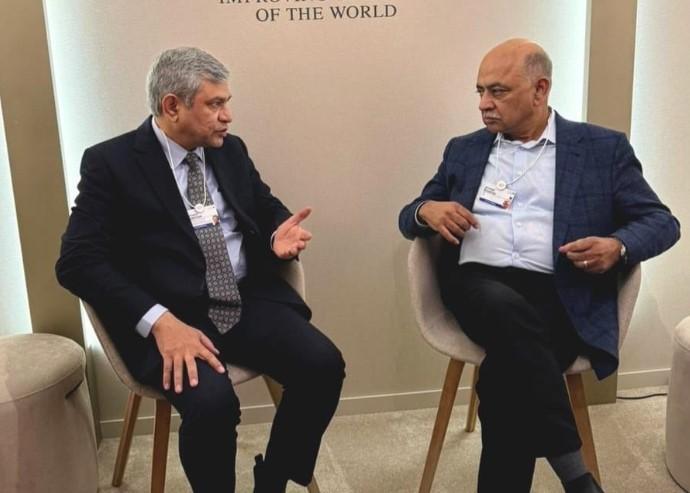
Union Minister for Electronics and Information Technology, Railways and Information & Broadcasting, Shri Ashwini Vaishnaw, highlighted India’s comprehensive approach to artificial intelligence, semiconductors and deep tech innovation during various interactions on the sidelines of the World Economic Forum Annual Meeting 2026 at Davos.
AI Impact Summit to Focus on Impact, Global South and Safety
Shri Vaishnaw said that the upcoming AI Impact Summit has been designed with a clear focus on outcomes. He stated that the first objective of the Summit is impact—how AI models, applications and the overall AI ecosystem can be used to improve efficiency, increase productivity and create a multiplier effect for the economy.
The second objective, he said, is accessibility, particularly for India and the Global South. Drawing parallels with India’s success in building the UPI and Digital Public Infrastructure (DPI) stack, Shri Vaishnaw noted that the world is now looking to India to see whether a similar, scalable and affordable stack can be created for AI.The third objective of the AI Impact Summit, the Minister said, is safety. He emphasised the need to address apprehensions around AI by building appropriate guardrails, guidelines and safety features, and stated that the regulatory and safety stack for AI should also be built in India.
He added that global leaders and technology leaders will participate in the Summit, alongside investment announcements and the rollout of India’s AI models.
Startup Growth and Deep Tech Momentum
The Union Minister noted that India now has nearly 200,000 startups and is among the top three startup ecosystems globally. He said there has been a fundamental shift over the last decade, with a growing focus on deep tech.
He highlighted that 24 Indian startups are designing chips, one of the most challenging areas for startups, and that 18 of them have already received venture capital funding, indicating strong confidence in India’s deep-tech capabilities.
Roadmap for Semiconductors
Shri Vaishnaw outlined India’s semiconductor strategy, noting that nearly 75 percent of global chip volume lies in the 28nm to 90nm range, covering applications such as electric vehicles, automobiles, railways, defence systems, telecom equipment and a large share of consumer electronics.
He said India is focusing on mastering manufacturing in this segment first, before progressing to advanced nodes. Working with industry partners, including IBM, India has a clearly mapped path from 28nm to 7nm by 2030, and 3nm by 2032.He expressed confidence that India will be among the top four or five semiconductor nations globally, citing its large talent pool, complete design capabilities, expanding manufacturing base and rapidly growing electronics market.Shri Vaishnaw also met Google Cloud CEO Thomas Kurian in Davos. Google is strengthening its commitment to India’s AI ecosystem, including a $15 billion AI data centre in Vizag, Andhra Pradesh and partnerships with Indian startups. He also met Joel Kaplan, Chief Global Affairs Officer, Meta in Davos and discussed safety of social media users from deepfakes and AI generated content. Meta briefed the Minister on its efforts to protect users.